History of Releases and Features of Each Release
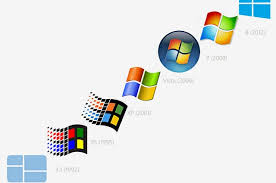
Windows 2.0 (1987): Improved the GUI, allowing applications to overlap, and introduced the Control Panel.
Windows 3.0 (1990): Became popular for its improved multitasking, ability to use more RAM, and better memory management.
Windows 3.1 (1992): Introduced TrueType fonts, making it a viable platform for publishing, and included the first version of Minesweeper.
The 9x and NT lines
Windows 95 (1995): A major shift that introduced the Start menu, taskbar, and advanced from a 16-bit to a 32-bit GUI.
Windows 98 (1998): An upgrade to Windows 95 that added features like support for multiple monitors and internet sharing.
Windows 2000 (2000): Focused on the business market, introducing features like preemptive multitasking and a file protection system.
Windows ME (2000): A consumer-focused version of Windows 9x, it was the last to be based on the MS-DOS kernel.
The modern era
Windows XP (2001): Widely praised for its user-friendly interface, stability, and improved support for portable PCs and wireless networking.
Windows Vista (2007): Introduced the User Account Control (UAC) feature for enhanced security.
Windows 7 (2009): A more focused upgrade to Vista, featuring a redesigned taskbar with jump lists, multi-touch support, and the HomeGroup networking system.
Windows 8 (2012): Introduced a new interface with the Start screen for touch-based devices.
Windows 10 (2015): Reintroduced the Start menu in a familiar format and added the virtual assistant Cortana.
Windows 11 (2021): Features a redesigned user interface with a centered Start menu, rounded corners, and an updated Microsoft Store.